1. What Is a Domestic Violence Protection Order in Taiwan?
A domestic violence protection order is a court-issued civil order intended to prevent domestic violence and safeguard the safety and rights of protected individuals.
Taiwan's Domestic Violence Prevention Act establishes the legal framework for protection order applications, court review, enforcement, and related criminal consequences. Protection orders may restrict certain conduct by the respondent, including violence, threats, harassment, contact, or approaching specified locations.
1.1 Purpose and Legal Basis of Civil Protection Orders
Civil protection orders are preventive legal measures rather than criminal convictions. Their primary purpose is to reduce the risk of domestic violence and provide legal protection before further harm occurs.Depending on the circumstances, a court may order a respondent to stop committing domestic violence, prohibit harassment or u nwanted contact, require the respondent to stay away from designated places, or impose other measures authorized by law.
Certain protection orders may also address residence, children, property, or other matters connected to the safety of protected persons. Because protection orders can significantly affect daily life and family relationships, respondents should carefully review their exact terms.
⚠️Importantly, being named as a respondent does not automatically mean that the allegations have been conclusively established in a criminal proceeding.
1.2 Who Can Apply for a Protection Order?
A person experiencing domestic violence may apply for a civil protection order under the Domestic Violence Prevention Act.
Depending on the type of order and applicable statutory provisions, prosecutors, police authorities, and local domestic violence prevention centers may also apply on behalf of a protected person. The law covers qualifying family and intimate relationships, subject to the statutory definitions and requirements. Applicants must provide information supporting the need for protection, while the court evaluates the evidence and circumstances under the applicable procedure.
For respondents, understanding who filed the application, what conduct is alleged, and which restrictions are requested is essential when preparing a response.
2. What Are the Three Types of Protection Orders?
Taiwan has three principal types of civil domestic violence protection orders: emergency protection orders, temporary protection orders, and ordinary protection orders.
➠They differ in urgency, application procedures, judicial review, and duration.
2.1 Emergency Protection Orders
An emergency protection order is designed for situations involving an immediate danger of domestic violence. Authorized authorities, including prosecutors, police agencies, and domestic violence prevention centers, may request an emergency order from the court.
Under the Domestic Violence Prevention Act, the court must issue an emergency protection order within four hours after receiving the application when the statutory requirements are satisfied. The court may issue the order without first holding a hearing or notifying the respondent. As a result, a respondent may learn about the order only when contacted by police or other responsible authorities. An emergency protection order generally remains effective until an ordinary protection order takes effect or another statutory ground for termination applies.
⚠️Because an emergency order can be issued rapidly, the respondent should immediately confirm its terms and comply with all applicable restrictions.
2.2 Temporary Protection Orders
A temporary protection order provides protection while an ordinary protection order application is being considered.
It may be appropriate when immediate protective measures are necessary but the circumstances do not require an emergency protection order. The court may issue a temporary protection order without holding a hearing, based on the application and available evidence. The respondent may therefore be subject to restrictions before the ordinary protection order proceedings are completed.
A temporary order generally remains effective until an ordinary protection order takes effect or the temporary order otherwise ceases to be effective under the law. Respondents should not assume that temporary orders are optional merely because they were issued without a full hearing.
2.3 Ordinary Protection Orders
An ordinary protection order is issued following judicial review of the application and relevant evidence. The court generally provides the parties with an opportunity to present their positions, although the procedure and hearing arrangements depend on the circumstances and applicable legal rules.
An ordinary protection order may remain effective for up to two years. Before expiration, an eligible party may apply for an extension, with each extension generally limited to two years. The court determines the appropriate protective measures according to the evidence and the need to prevent further domestic violence.
🚨Respondents should pay close attention to the order's duration, restrictions, and any requirements involving contact, residence, children, or other matters.
3. What Should You Do After Receiving a Protection Order Notice?
Receiving a protection order application or court hearing notice does not mean that the respondent has already lost the case. However, ignoring the proceedings can make it more difficult to present evidence or challenge allegations. The appropriate response is to understand the application, preserve relevant evidence, and prepare for the court procedure.
3.1 Responding to Court Notices and Preparing Evidence
Do not ignore a court notice concerning an ordinary protection order application. If the respondent fails to appear without an appropriate reason, the court may still proceed and decide the application based on the available evidence and applicable procedural rules. Before the hearing, review the allegations and identify any disputed facts.
Relevant evidence may include:
- text messages
- communication records
- surveillance footage
- photographs
- witness statements
- other documents showing the circumstances of the alleged incident
Evidence should be preserved in its original form whenever possible.
➠If the respondent believes the allegations are inaccurate or incomplete, the response should identify the disputed facts and provide supporting evidence rather than relying only on general denials.
3.2 Presenting Your Position During Court Proceedings
Court proceedings provide an opportunity to explain the circumstances and respond to the protection order application. Statements should be factual, specific, and consistent with the available evidence.
The court may examine the history of the relationship, the alleged incidents, the parties' communications, and whether protective measures are necessary. Avoid threatening, intimidating, or attempting to pressure the applicant before or during the proceedings. Such conduct may create additional legal risks and may become relevant to the court's assessment. Consulting a lawyer before the hearing can help identify the legal issues, organize evidence, and prepare a clear response.
4. Can You Appeal a Protection Order in Taiwan?
Yes. A respondent who disagrees with a court's protection order ruling may seek appellate review through the applicable objection or appeal procedure. However, protection order proceedings have strict deadlines, and challenging an order does not automatically suspend its legal effect.
4.1 The 10-Day Appeal Deadline and Legal Grounds
A protection order ruling may generally be challenged by filing an interlocutory appeal within 10 days after service of the ruling, subject to the applicable procedural rules. The written appeal should identify the challenged ruling, explain the requested relief, and specify the factual or legal reasons for disagreement.
Potential grounds may include:
- insufficient evidence of domestic violence
- material errors in factual findings
- incorrect application of the law
- restrictions that are not adequately supported by the circumstances
For example, a respondent may argue that the evidence does not establish the alleged conduct or that a particular restriction is disproportionate to the demonstrated protective need. A successful appeal requires more than expressing dissatisfaction with the outcome. Because the filing period is short, respondents should review the ruling promptly and obtain legal assistance where necessary.
4.2 Does an Appeal Suspend Enforcement?
No. Filing an appeal against a protection order generally does not suspend enforcement.
Under the Domestic Violence Prevention Act and the applicable procedural rules, the respondent must continue to comply with the order while the appeal is pending. This means that restrictions on contact, harassment, approaching designated locations, or other prohibited conduct remain binding unless the court changes or terminates them. A respondent who violates the order during the appeal process may face separate criminal liability.
💡The safest approach is to comply with the existing order while pursuing the appropriate legal challenge.
5. What Happens If You Violate a Protection Order?
Violating certain court-issued protection order provisions may constitute a criminal offense under Taiwan's Domestic Violence Prevention Act. A protection order is not merely an informal warning or private agreement. Once effective, its enforceable restrictions must be respected even when the respondent disputes the allegations.
5.1 Criminal Penalties Under Article 61
Article 61 of the Domestic Violence Prevention Act provides criminal penalties for violations of specified protection order provisions. The statutory punishment may include imprisonment for up to three years, short-term imprisonment, or a fine of up to NT$100,000, with fines potentially imposed together with imprisonment. Not every disagreement involving a protection order automatically constitutes a criminal violation. The prosecution must establish that the conduct falls within the relevant criminalized restrictions and satisfies the required elements.
🚨Nevertheless, intentional violations of prohibited contact or approach restrictions can create substantial criminal exposure.
5.2 Contact Restrictions and Common Violations
Common situations involving potential protection order violations include approaching a protected person's residence or workplace, making prohibited telephone calls, sending messages, or engaging in harassment or intimidation. The precise legal consequences depend on the wording of the order. Even contact intended to apologize, reconcile, or discuss children may create legal risks if the order prohibits that form of communication.
A protected person's willingness to communicate does not necessarily cancel a court-issued restriction. Where communication is necessary for children, property, or other legitimate matters, respondents should consult legal counsel and use channels permitted by the order. Communication through a lawyer or another intermediary is not automatically lawful if the order prohibits indirect contact.
6. Can a Protection Order Be Revoked or Modified?
Protection orders are not necessarily permanent or unchangeable. Taiwan's Domestic Violence Prevention Act provides procedures for reviewing whether an existing order should remain in effect, be modified, or be revoked. However, a respondent cannot independently decide that an order no longer applies merely because the relationship has improved.
6.1 Applying for Revocation or Modification
Under Article 15 of the Domestic Violence Prevention Act, eligible parties may apply to the court for revocation, modification, or extension of an ordinary protection order before it expires. A respondent seeking revocation or modification should explain the relevant circumstances and provide supporting evidence.
For example, a change in living arrangements, family circumstances, or the need for particular restrictions may be relevant to the court's assessment. The court will consider whether continued protection remains necessary and whether the requested changes are appropriate. Until the court issues an effective decision changing or revoking the order, the respondent must continue to comply with the existing terms.
6.2 Changes in Circumstances and Protection Order Expiration
An ordinary protection order generally remains effective for the period specified by the court, subject to the statutory maximum and applicable extension rules.
If the circumstances change substantially, an application for modification or revocation may be appropriate. Temporary and emergency protection orders may also cease to be effective under specified statutory circumstances, including when an ordinary protection order takes effect. The withdrawal of an ordinary protection order application may have consequences for related temporary or emergency orders under the applicable provisions.
➠However, respondents should verify the legal status of every order rather than assuming that reconciliation or withdrawal automatically removes all restrictions.
7. How Can a Taiwan Protection Order Lawyer Help?
Protection order proceedings may involve sensitive family relationships, disputed allegations, personal safety concerns, and potential criminal liability. Legal assistance can be important for both applicants seeking protection and respondents who need to challenge allegations or understand their obligations.
Chien Sheng International Law Firm provides legal services in Taiwan, with offices in Taipei, Taoyuan, and Kaohsiung.
The firm's attorneys assist with family-related legal disputes, criminal defense, police questioning, and proceedings involving protection order violations. For respondents, legal assistance may include reviewing the application, examining evidence, preparing written submissions, attending court hearings, and evaluating whether an appeal or modification application is appropriate. Where a protection order is accompanied by criminal allegations such as assault, threats, harassment, or violation of a protection order, the legal strategy should address both the protection order proceedings and the related criminal investigation.
🧑🏻⚖️An attorney can also help clarify which communications or actions are prohibited and how necessary family matters may be handled without violating the order. Early legal advice may help preserve evidence, protect procedural rights, and reduce the risk of additional legal complications.
8. Frequently Asked Questions (FAQ)
Q1. What should I do if someone files a protection order against me in Taiwan?
Review the application and court notices carefully, preserve relevant evidence, and prepare to respond through the appropriate legal procedure. Do not ignore the proceedings or contact the applicant in a way that could create additional legal risks.
Q2. Does being named in a protection order application mean I committed domestic violence?
No. An application does not automatically establish criminal guilt. The court must assess the relevant facts and legal requirements before deciding whether protective measures are justified.
Q3. What are the three types of protection orders in Taiwan?
Taiwan has emergency protection orders, temporary protection orders, and ordinary protection orders. They differ in urgency, procedures, duration, and the circumstances in which they are issued.
Q4. Can a protection order be issued without a court hearing?
Yes. Emergency and temporary protection orders may be issued without a hearing when the applicable statutory requirements are satisfied.
Q5. How long does an ordinary protection order last?
An ordinary protection order may remain effective for up to two years. Eligible parties may apply for an extension before expiration, with each extension generally limited to two years.
Q6. How long do I have to appeal a protection order?
The general period for an interlocutory appeal is 10 days after service of the ruling, subject to the applicable procedural rules. Promptly reviewing the ruling is essential.
Q7. Can I ignore a protection order while my appeal is pending?
No. Filing an appeal generally does not suspend enforcement. The respondent must comply with the order unless and until it is legally changed or terminated.
Q8. What is the punishment for violating a protection order in Taiwan?
Under Article 61 of the Domestic Violence Prevention Act, violating specified protection order provisions may result in imprisonment for up to three years, short-term imprisonment, or a fine of up to NT$100,000, potentially combined with imprisonment.
Q9. Can I contact the protected person if they agree to speak with me?
Not necessarily. The court's restrictions remain binding even if the protected person agrees to communicate. Review the order carefully and obtain legal advice before initiating contact.
Q10. Can a protection order be canceled if both parties reconcile?
Reconciliation does not automatically cancel an existing order. Eligible parties may apply for revocation or modification, but the court must determine whether the legal requirements are satisfied.
9. Conclusion
Being the respondent in a domestic violence protection order proceeding in Taiwan can affect family relationships, residence arrangements, communication, and personal legal rights.
However, receiving a protection order application does not automatically mean that the allegations have been conclusively established. Taiwan's Domestic Violence Prevention Act provides emergency, temporary, and ordinary protection orders, each with different procedures and legal consequences. Respondents should take court notices seriously, preserve evidence, understand the restrictions imposed, and use the appropriate procedures to challenge or modify an order.
Importantly, filing an appeal does not generally suspend enforcement. Violating specified protection order restrictions may result in separate criminal charges.
🧑🏻⚖️Chien Sheng International Law Firm assists clients with protection order proceedings, family-related disputes, and associated criminal investigations in Taiwan. Early legal assistance may help clarify available remedies, protect procedural rights, and develop an appropriate legal response.
【CHIEN SHENG LAW FIRM】
- LINE Online Legal Consultation::@lawuicc001(Click to Consult)
- Appointment by Phone::(03)⠀3150-034
- Payment Methods: Cash|Credit Card|Bank Transfer
【Learn More】

 政府採購法違反會被判刑嗎?圍標、借牌投標、陪標、洩密罪與刑事辯護完整解析政府採購圍標、借牌投標、陪標會被判刑嗎?同業合作、相同IP投標或工程圖說外流,是否就代表犯罪?本文解析政府採購法第87條、第89條及常見違法態樣,說明行政異常與刑事責任的界線,以及企業面臨檢調調查時的法律辯護方向。刑事案件知識文 2026.10.19
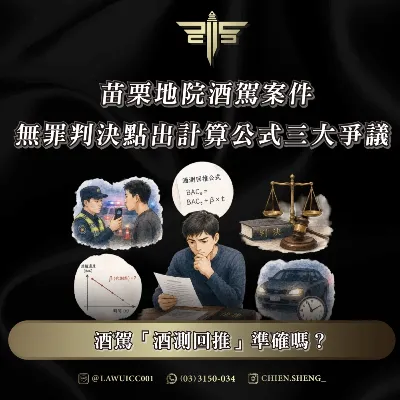 酒駕酒測回推可以定罪嗎?苗栗地院無罪判決解析酒精濃度回推公式三大爭議|公共危險罪律師解析酒測只有0.11毫克,檢方卻回推出駕車時高達0.50毫克,這樣能判酒駕有罪嗎?苗栗地院無罪判決指出酒精代謝研究樣本、個人體質差異及不能安全駕駛證據三大問題,一文看懂「酒測回推」能否成為公共危險罪定罪依據。刑事案件知識文 2026.08.28
 被聲請保護令怎麼辦?保護令種類、開庭流程、抗告期限、撤銷變更與違反保護令刑責完整解析突然收到保護令通知,該如何應對?本文解析緊急、暫時與通常保護令的差異、法院開庭與抗告流程、撤銷變更方式,以及違反保護令的刑事責任,協助了解相對人的程序權利與注意事項。刑事案件知識文 2026.11.05
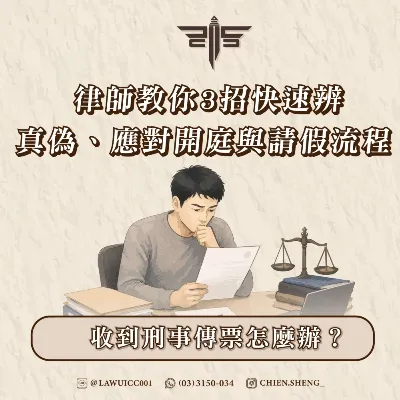 收到刑事傳票怎麼辦?如何分辨真假、一定要出庭嗎?刑事律師教你處理5步驟突然收到法院或地檢署刑事傳票先別慌!本文整理傳票真假辨識、被告與證人的到庭義務、無法出庭如何請假,以及偵查庭與刑事律師陪訊的重要注意事項。刑事案件知識文 2026.09.08